Prepare for your Canadian Citizenship Practice Test with our free, accurate, and up-to-date practice tests. All questions are based on the official Discover Canada guide, helping you study the exact topics covered on the real test — includingCanadian history, government, laws, symbols, and more. Track your progress, get instant feedback, and build confidence to pass on your first attempt.
What to Expect on the Official Canadian Citizenship Test
Number of Questions
20
Correct Answers to Pass
15
Passing Score
75%
Length of Test
45 min
Canadian Geography for Citizenship Test – Provinces, Regions & Landmarks
Canadian Citizenship Practice Test 2026
Why Canadian Geography Is Important for the Citizenship Test
The Canadian Citizenship Test is an official test required for most permanent residents who apply to become Canadian citizens. The test evaluates your understanding of Canada’s history, values, institutions, and national identity.
Applicants must demonstrate knowledge of:
• Canadian history • Canadian geography • Government and political system • Rights and responsibilities of citizens • Canadian symbols and culture
All questions come directly from the official study guide Discover Canada: The Rights and Responsibilities of Citizenship.
Canadian Citizenship Test Practice Questions
Canadian Geography Topics on the Citizenship Test
The citizenship test may include questions about:
• Provinces and territories • Major geographic regions • Natural resources • Mountains, lakes, and rivers • Major cities and landmarks
Understanding these topics will help you answer geography-related questions correctly.
Canada Citizenship Test Questions
Provinces and Territories of Canada
Canada is made up of 10 provinces and 3 territories, each with its own government and unique geographic characteristics.
The 10 Provinces
The provinces are:
• Ontario • Quebec • British Columbia • Alberta • Manitoba • Saskatchewan • Nova Scotia • New Brunswick • Prince Edward Island • Newfoundland and Labrador
Provinces have constitutional powers that allow them to manage areas such as education, healthcare, and natural resources.
Free Canadian Citizenship Practice Test
The 3 Territories
Canada also has three territories:
• Yukon • Northwest Territories • Nunavut
Territories have governments similar to provinces but receive more administrative authority from the federal government.
The territories are known for their vast northern landscapes, Arctic climate, and Indigenous cultures.
Canadian Citizenship Exam Practice
Major Regions of Canada
Canada is often divided into several geographic regions. Each region has its own climate, industries, and natural features.
Atlantic Region
The Atlantic region includes:
• Newfoundland and Labrador • Nova Scotia • New Brunswick • Prince Edward Island
This region is surrounded by the Atlantic Ocean and has strong traditions in fishing, shipbuilding, and maritime trade.
Canada Citizenship Test Preparation
Central Canada
Central Canada includes:
• Ontario • Quebec
This region is the most populated part of the country and is home to major cities such as Toronto, Montreal, and Ottawa.
Central Canada has strong industries including manufacturing, finance, and technology.
Discover Canada Practice Questions
Prairie Provinces
The Prairie region includes:
• Manitoba • Saskatchewan • Alberta
This region is known for vast farmland and agricultural production. The Prairies are a major source of wheat, grains, and livestock.
Alberta also has large oil and natural gas resources.
Discover Canada Practice Questions
West Coast Region
British Columbia forms the Pacific region of Canada.
This province has mountains, forests, and coastal landscapes. Major industries include forestry, tourism, film production, and international trade through Pacific ports.
Discover Canada Practice Questions
Northern Canada
The northern region includes:
• Yukon • Northwest Territories • Nunavut
These territories cover a large portion of Canada’s landmass but have smaller populations.
The region contains Arctic landscapes, mineral resources, and unique Indigenous cultures.
Discover Canada Practice Questions
Natural Landscapes of Canada
Canada has some of the most diverse natural landscapes in the world.
Important natural features include:
• The Rocky Mountains • The Canadian Shield • The Great Lakes • Arctic tundra • Boreal forests
These landscapes influence Canada’s climate, wildlife, and economic activities.
Discover Canada Practice Questions
The Rocky Mountains
The Rocky Mountains run through western Canada and form one of the country’s most famous natural landmarks.
They attract millions of visitors each year for outdoor activities such as skiing, hiking, and wildlife viewing.
Discover Canada Practice Questions
The Great Lakes
The Great Lakes form part of the border between Canada and the United States.
The five Great Lakes are:
• Lake Superior • Lake Michigan • Lake Huron • Lake Erie • Lake Ontario
These lakes contain about 20% of the world’s fresh surface water.
They are important for transportation, trade, and drinking water.
Discover Canada Practice Questions
The Canadian Shield
The Canadian Shield covers much of central and northern Canada.
It is rich in natural resources such as minerals, metals, and forests.
Mining and forestry are major industries in this region.
Discover Canada Practice Questions
Natural Resources of Canada
Canada is rich in natural resources that support the national economy.
Major resources include:
• Oil and natural gas • Forests and timber • Minerals and metals • Freshwater resources • Agricultural land
Natural resources play an important role in Canada’s industries and international trade.
Discover Canada Practice Questions
Major Cities in Canada
Several major cities play important roles in Canada’s economy and culture.
Some of the largest cities include:
• Toronto • Montreal • Vancouver • Calgary • Edmonton • Ottawa
Ottawa is the capital city of Canada and the center of the federal government.
Canadian Citizenship Mock Test
Why Use Our Canadian Citizenship Practice Tests
Our platform helps thousands of applicants prepare for the Canadian Citizenship Test.
Benefits include:
• Realistic exam-style questions • Instant feedback and explanations • Unlimited free practice tests • Mobile-friendly study experience • Updated questions based on the official guide
Practicing regularly can significantly increase your confidence before the real exam.
Canadian Citizenship Mock Test
Sample Canadian Citizenship Test Question
Here is an example of a geography question that may appear on the citizenship test.
Question: How many provinces are there in Canada?
A. 8 B. 10 C. 12 D. 13
Correct Answer: B – 10
Canada has 10 provinces and 3 territories.
Canadian Citizenship Mock Test
How to Study Canadian Geography for the Citizenship Test
1. Learn the Provinces and Territories
Make sure you can identify all provinces and territories of Canada.
Many citizenship test questions focus on this topic.
2. Understand Canada’s Major Regions
Study the five main geographic regions:
• Atlantic Canada • Central Canada • Prairie Provinces • West Coast • Northern Territories
Understanding these regions will help answer geography questions.
3. Review Natural Landmarks
Focus on key geographic features such as:
• The Rocky Mountains • The Great Lakes • The Canadian Shield • Major rivers and forests
4. Practice with Citizenship Test Questions
Practice tests help you remember important facts and improve your test readiness.
Learn about Canada’s modern economy, industries, and role in the world.
Canadian Citizenship Test
Discover Canada – The Rights and Responsibilities of Citizenship
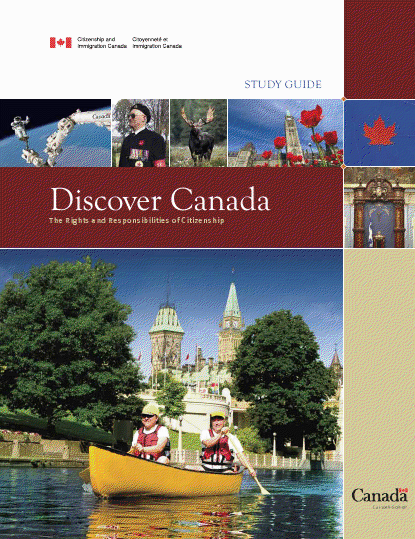
Discover Canada: The Rights and Responsibilities of Citizenship is used by newcomers to study for the citizenship test. It also contains information about the history of Canada, how our government works, symbols of Canada and its regions.
Start Your Canadian Citizenship Test Preparation Today
Preparing for the Canadian Citizenship Test doesn’t have to be difficult. With the right study tools and practice questions, you can build confidence and improve your chances of passing the exam. Take your first practice test now and begin your journey toward becoming a Canadian citizen.